 Kpali
KpaliGuide
Pay a TV / decoder bill
IUC lookup first.
Are you keeping the decoder running at home? Keep the decoder subscription running at home.
A decoder renewal is a small payment with an outsized consequence: get it wrong and a household loses the thing they notice most.
The walkthrough below covers finding the right number, confirming the right account, and keeping the proof.
Step by step
- Install Kpali. The Android package is
app.kpali; Kpali is on the App Store for iPhone. There is no browser version — money screens gate on the device. - Fund store credit. Open Add money. Choose USDT or USDC, then the network — TRC-20 credits after twenty confirmations, BEP-20 after fifteen. The warning about the network is above the address because sending on the wrong chain cannot be undone by anyone. The minimum is shown before the address.
- Decide whose credit this is. Your email in the email field notifies you. Somebody else's email credits them instead, and they are told when it lands.
- Wait for Home. Store credit appears when the deposit confirms. An address is not money.
- Set the country. The country decides what the catalogue can sell. Home is where it starts.
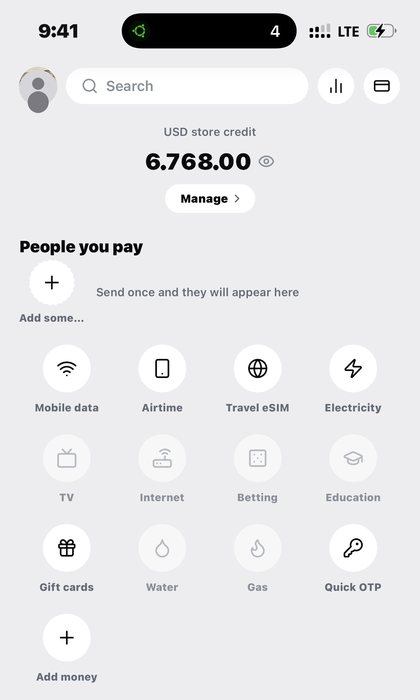
- Open TV. Home → country → TV → provider → smartcard/IUC → lookup → Pay.
- Enter the recipient. The smartcard or IUC number is looked up and the account name returned before you pay, so the renewal lands on the right box.
- Read the review sheet. It states the recipient and what leaves your wallet, fee included, before anything is charged.
- Pay. If store credit cannot cover the amount plus the fee, Pay does not proceed and nothing is sent to a provider.
- Keep the receipt. A renewed subscription, with the bouquet and the period named on the receipt.
What to expect
The receipt names the bouquet and the period, so what was paid for is never ambiguous. History keeps the renewal against the smartcard. Store credit on Home moves by the package price plus the fee.
A refused order reverses and states that nothing was charged. An order still being checked has not failed, and treating it as failed is what costs money. On this walkthrough that matters at the last step: once you have paid for tv, the receipt is the thing to read, not the Pay button to press again.
What goes wrong
- Using the decoder's serial number instead of the smartcard or IUC.
- Renewing the package the household had last year rather than the one they are on.
- Assuming the renewal starts today rather than on the provider's cycle.
- Not checking the name that comes back.
A worked example
A worked example. The decoder at home lapses on Sunday. You find the IUC number — not the serial number printed beside it — and enter it. The account name comes back and it is the right household. You pick the bouquet they are actually on rather than the one they had last year, read the total, and pay. The receipt names the bouquet and the period, which is what settles the question in three months when somebody asks whether that month was covered.
If it does not work
The number is not recognised. You are probably using the decoder's serial number. The smartcard or IUC is a different number printed near it.
The bouquet you expected is missing. The provider changed its packages. Kpali lists what the provider currently sells.
Paid, but the screen is still dark. Providers apply renewals on their own cycle and some boxes need a refresh. Give it time before paying again.
The account name is wrong. Do not pay. That smartcard belongs to somebody else.
Pay is blocked. The total is more than your store credit.
Worth knowing
A final note on timing. Renew before the lapse rather than after it. Providers apply renewals on their own cycle, and a payment made the morning the subscription expires does not always beat the cutoff — which is exactly the scenario that generates a phone call from a dark living room.
Where this works
Nigeria and Ghana carry the deepest decoder lists; other markets appear as the catalogue supports them. Coverage for tv is decided per country and shown before you pay, so you find out what is possible while you are still choosing rather than after you have committed. Where it cannot be delivered today, the app says so with a reason attached.
The full picture — who it suits, what decides availability, what it costs and every question people ask — is on the TV page.
Pay a TV / decoder bill. IUC lookup first.
Kpali takes no card details on this website, ever. The one payment it takes is a naira bank transfer for store credit, on /store-credit/. A page asking for a card number for Kpali is not us.
Admin URLs are intentionally absent from navigation, sitemaps and robots allow-lists.
When Claude finishes the completeness wave, real device screenshots replace the token-built phone frames without changing the red circle targets.
Download Kpali from Google Play (package app.kpali) or the App Store (id 6802318301).
Create an account. You do not need a local bank account to start.
Open Add money. Read the network warning above the address. Enter the amount. The minimum is stated before you copy.
Enter an email: yours to be notified, or theirs if this deposit should credit another person.
Send the crypto on the stated network. Wait until Home shows store credit. An address is not money.
Set the country to Algeria.
Open Airtime. Home → country → Airtime → network → number → amount → Pay.
Confirm a mobile number on the review sheet. Pay is blocked if the balance cannot cover it.
Keep the receipt. Receipt + History show the number, network, amount and status.
If status is Checking, do not retry. Read the receipt. Support is email and WhatsApp.